

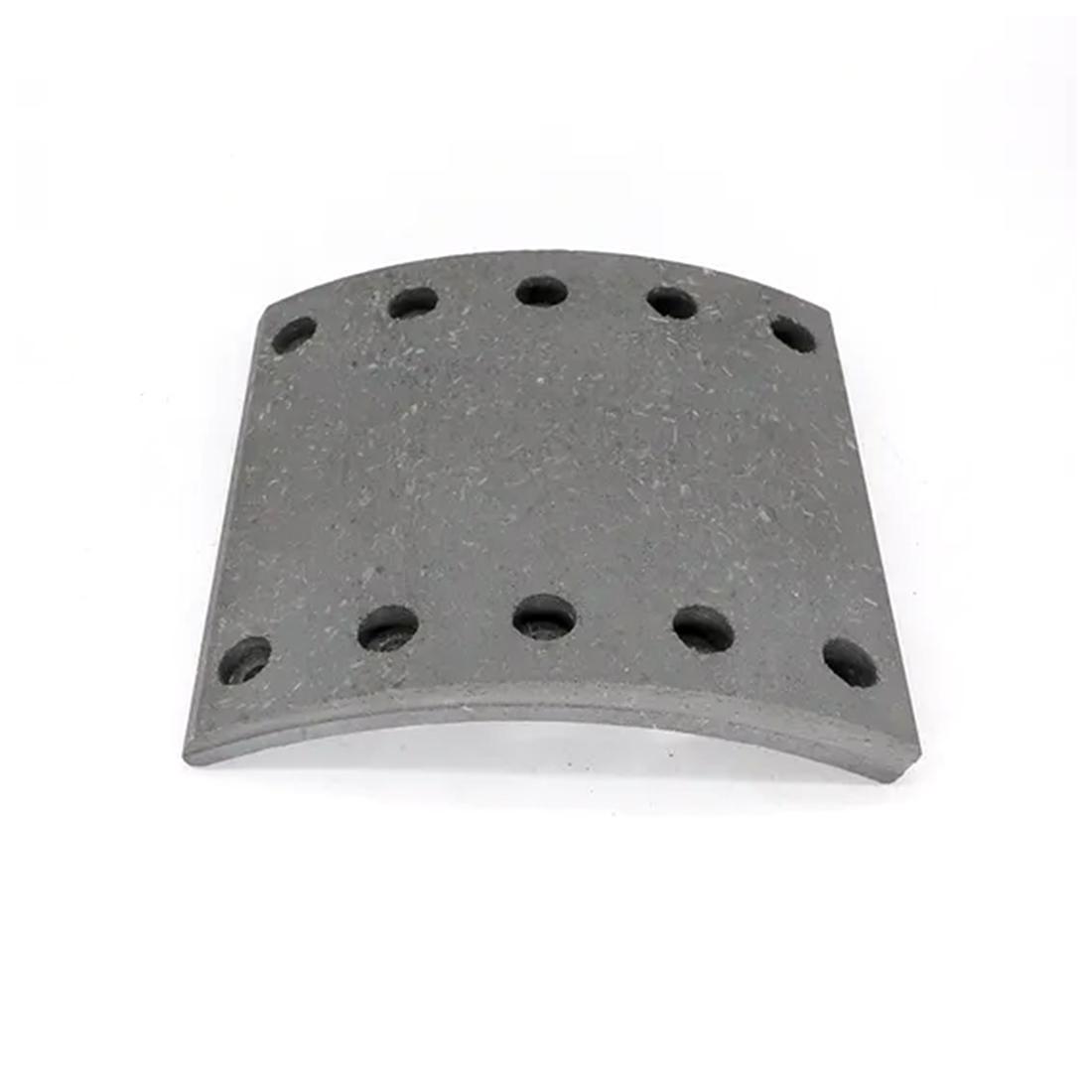
 The working principle of automotive brake pads is essentially to convert the kinetic energy of the vehicle into thermal energy through friction, thereby achieving vehicle deceleration or stopping. The entire process is accomplished through the mechanical structure of the braking system and the principle of tribology in coordination. Specifically, it is divided into the following core steps:
1. Braking signal transmission and force amplification
When the driver steps on the brake pedal, the mechanical force of the pedal is transmitted to the brake master cylinder. The piston inside the master cylinder is compressed, pushing the brake fluid to flow in the sealed brake lines. For a hydraulic braking system, the brake fluid evenly transmits pressure to the brake calipers of each wheel. For pneumatic braking systems (mostly used in heavy vehicles such as trucks and buses), compressed air is used to push the caliper piston.
This process will leverage the lever principle and the pressure characteristics of hydraulic/pneumatic systems to amplify the smaller pedal force applied by the driver several times to meet the powerful force required for braking.
2. The contact and adhesion between brake pads and brake discs
The piston inside the brake caliper extends outward under pressure, pushing the brake pads on both sides of the caliper (divided into inner brake pads and outer brake pads), causing them to quickly adhere to the surface of the brake disc that rotates synchronously with the wheel.
The friction surface of the brake pad will completely press against the brake disc. At this point, the gap between the two is eliminated, and it enters the friction braking stage.
3. Frictional heat generation achieves kinetic energy consumption
When the friction material of the brake pad comes into contact with the brake disc, it will generate a strong frictional force. This frictional force will impede the rotation of the brake disc, and the brake disc is rigidly connected to the wheel, thereby hindering the rotation of the wheel.
During this process, the kinetic energy of the car's movement is converted into heat energy through friction, and the heat is dissipated into the brake pads, brake discs and the surrounding air. When the kinetic energy of a vehicle is continuously consumed, its speed will gradually decrease until it comes to a complete stop.
4. Brake release and reset
When the driver releases the brake pedal, the pressure in the brake master cylinder is relieved and the pressure in the brake lines drops. The reset spring inside the brake caliper pulls the piston back to its original position, creating a new gap between the brake pads and the brake discs. The frictional effect disappears, and the wheels return to a free rotation state, thus completing the braking process.
Supplementary: Key factors affecting braking effect
The performance of friction materials: The coefficient of friction of brake pad friction materials directly determines the magnitude of braking force. High-temperature resistance can prevent the coefficient of friction from dropping sharply at high temperatures (i.e., "thermal fade"), ensuring the stability of continuous braking.
The fit between brake pads and brake discs: The larger the fit area and the more uniform the pressure, the more stable the braking effect. Therefore, the processing accuracy of brake pads and the design of calipers are of vital importance.
Heat dissipation efficiency: If the heat generated during braking cannot be dissipated in time, it will cause the temperature of the brake pads and brake discs to be too high. This not only reduces braking performance but may also accelerate the wear of the brake pads and even lead to braking failure.