

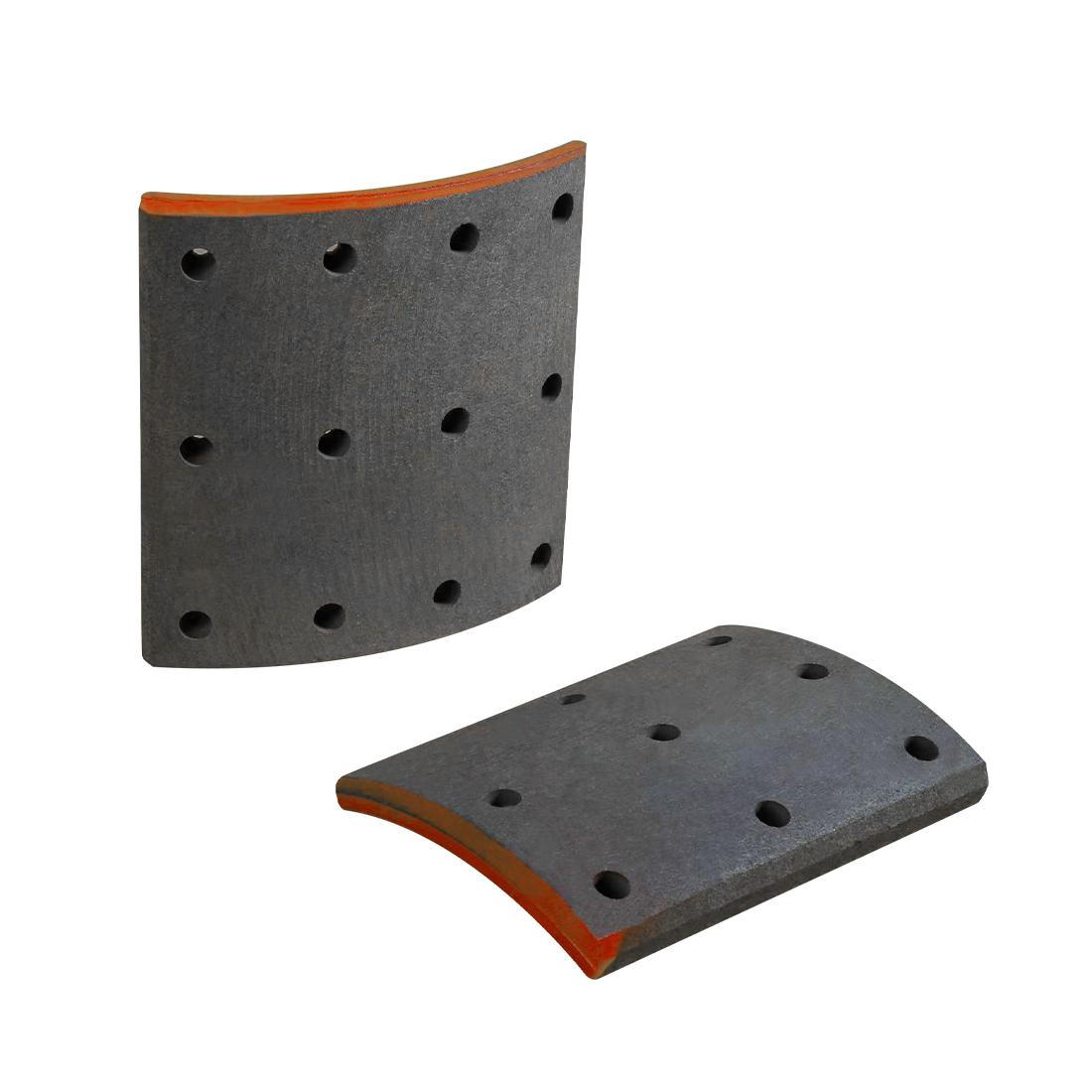
 To determine whether a car's brake pads need to be replaced, a comprehensive judgment can be made through three methods: visual inspection, driving experience, and professional testing. The threshold for replacing brake pads varies slightly among different car models, but the core judgment criteria are the same, as follows:
1. Visual inspection: Check the thickness and wear marks
(1) Check the thickness: The standard thickness of the friction material of brake pads is approximately 10-15mm. When it wears down to 3-5mm, it is necessary to prepare for replacement. If the thickness is less than 2mm, it is in a high-risk state and must be replaced immediately; otherwise, the brake disc will be damaged.
Inspection method: For family cars, you can directly observe the friction layer (the black part) of the brake pads through the gap of the wheel hub. By comparing it with the thickness of the backplate, you can make a preliminary judgment. If the wheel hub is blocked and cannot be observed, the tire needs to be removed for inspection.
(2) Check the wear mark: Almost all brake pads come with a wear warning plate/groove mark, which is the replacement critical point set by the manufacturer. When the friction material wears down to the same level as the warning plate, the brake pads will rub directly against the brake disc. At this point, they must be replaced.
2. Driving experience: Listen to the sound and feel the braking
(1) Listen to the warning noise: Some brake pads are equipped with metal warning plates. When they wear to the limit, a sharp metal friction sound (similar to "creaking" or "shrill scraping" sounds) will occur when braking or driving normally. This is the most obvious signal for replacement.
Note: If there is a "dull sound" or "abnormal noise" when braking, but the thickness of the brake pads is sufficient, it may be due to foreign objects getting stuck or problems with the material of the brake pads. Cleaning or inspection is required.
(2) Feel the braking effect: If the braking distance significantly increases, the pedal becomes soft or drifts when stepping on the brake, or the vehicle body shakes during braking, and after ruling out faults in the brake fluid or brake discs, it is highly likely that the friction coefficient of the brake pads has decreased and they need to be replaced.
3. Professional inspection: Check the alarm lights and read the data
(1) Warning light: Some mid-to-high-end models are equipped with a brake pad wear warning system. When the brake pads wear to the limit, the "Brake System Failure Light" or the dedicated "Brake pad Warning Light" on the dashboard will light up. At this time, it is necessary to go to the store for inspection and replacement in a timely manner.
(2) Professional inspection: Go to a repair shop and measure the thickness of the brake pads with special tools. At the same time, check whether the brake discs have been worn out into deep grooves or deformed. If the brake discs are severely damaged, they need to be replaced simultaneously with the brake pads.
Supplement: Replacement precautions
It is recommended to replace brake pads in pairs on the same axis (left front + right front, or left rear + right rear) to avoid uneven braking force on both sides causing brake deviation.
The wear rate of rear brake pads is usually slower than that of front brake pads (the front brake of a front-wheel drive vehicle bears about 70% of the braking force), but they still need to be inspected regularly and should not be ignored.